Understanding Biome Progression and Difficulty in Minecraft
Filed under Hardcore Survival & Permadeath · How we create content
Version scope: All versions (Java & Bedrock)
Key Takeaways
| Point | Details |
|---|---|
| Minecraft uses biome progression | Minecraft uses biome progression as a soft difficulty curve, starting with peaceful plains and escalating to the dangerous Nether and End. |
| Starter biomes are intentionally | Starter biomes are intentionally balanced to avoid difficulty spikes that could overwhelm new players. |
| The game subtly encourages | The game subtly encourages exploration by gating essential resources like specific wood types in certain biomes. |
| Many players never visit | Many players never visit harder biomes, highlighting that Minecraft respects player choice in difficulty. |
| Understanding biome danger levels | Understanding biome danger levels is essential for planning safe routes in hardcore survival mode. |
Minecraft's biomes aren't just scenic backdrops — they form a deliberate difficulty curve that shapes how you experience the game. From the moment you spawn, the world around you telegraphs what kind of challenge to expect. Understanding this progression is especially critical for hardcore survival, where one wrong step into a hostile biome can end your run.
How Starter Biomes Set the Safety Baseline
When you begin a new world, the algorithm typically places you in a plains or forest biome. These areas are packed with passive mobs, open space for building, and plenty of trees. This isn't accidental. As the official Mojang series "Around the World in 80 Biomes" explains, the developers take care to avoid early difficulty spikes.
Narrator then states that every update, Mojang Studios must makes sure not to add any unintentional difficulty spikes to the starter biomes, and that even the slightest change in the ecosystem could lead the entire Overworld into chaos.
Narrator goes on to say that many games start the player off in a tranquil forest area, and that these areas are supposed to be welcoming so as to not overwhelm neophytes.
According to the series, many games start players in a tranquil area to avoid overwhelming newcomers. But Minecraft goes a step further: it uses the initial safety to make the player feel comfortable before introducing greater danger. As one character puts it, "Mojang starts you off in forests and greenery to trick players into thinking Minecraft 'isn't a jerk.'"
According to MARILLA, Mojang starts you off in forests and greenery to trick players into thinking Minecraft ‘isn’t a jerk’.
The Escalation of Danger Through Biomes
Once you leave the starter zone, the difficulty rises steadily. Dark forests have constant darkness that enables hostile mobs to spawn during the day, swamps have increased slime spawns, and badlands have standard hostile mob spawn rates. The escalation is most dramatic when you enter the Nether — a dimension of lava oceans, Ghasts, and Piglin hordes. The series explicitly describes this progression:
Then the biomes steadily get more sinister, until players are ‘burning in the Nether’ and ‘ending in the End'.
This "sense of escalation" is a core design principle. By the time you reach the End and face the Ender Dragon, the game expects you to have mastered the resources and combat skills gained across multiple biomes. Each biome layer trains you for the next.
The Voluntary Nature of Biome Difficulty
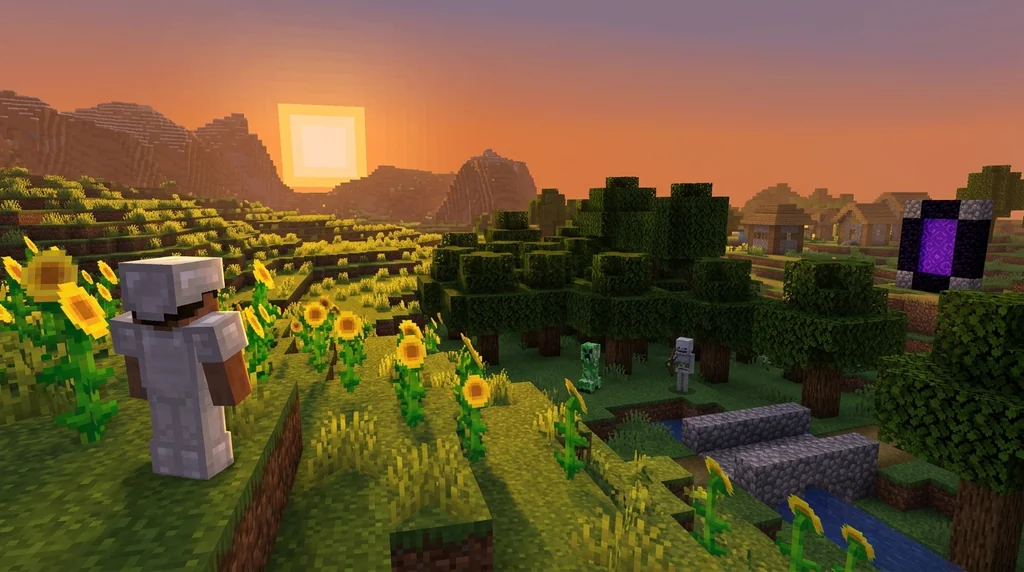
One of Minecraft's unique traits is that it doesn't force you to visit harder areas. The series notes:
Narrator states that Minecraft is unique because it doesn’t force players to visit the harder levels.
Some players have never seen the Nether or the End, in fact.
This is both a blessing and a trap for hardcore players. You can stay in the safe zone forever, but you'll miss out on essential resources like blaze rods, ender pearls, and many enchantments. The developers admitted that a significant number of players never even venture into the Nether, which is why they designed more subtle incentives to push exploration.
Subtle Incentives to Leave Your Comfort Zone
Instead of a difficulty gate, Minecraft uses resource scarcity to encourage biome-hopping. You need wood from a forest to build tools, and certain biomes offer unique blocks or mob drops. The series explains this approach:
Narrator states that Minecraft has more subtle ways to make you visit new biomes.
For example, the plains may have many animals and land to build on, but if players want the wood to build useful tools, they will have to visit a biome with more trees.
For example, the plains have plenty of grazing animals, but if you want dark oak wood, you'll need to enter a dark forest — where hostile mobs spawn constantly day and night. This forces you to weigh risk versus reward for every biome you enter.
What This Means for Hardcore Survival
For hardcore players, understanding biome progression is a practical tool. You can plan your route: establish a safe base in a plains or forest, gather initial gear, then methodically explore biomes in order of increasing danger. Skip straight to a dark forest or Nether fortress without iron armor, and you're dead. Use the built-in difficulty curve as a guide to pace your progression. For more specific strategies, check out our guides on Hardcore Mode Survival Mechanics and Understanding Hardcore Mode in Minecraft for Servers and Single-Player.
The Future of Biome Difficulty
Mojang continues to rework older biomes to add both variety and challenge. While no dates are set, the desert, savanna, and badlands biomes are all slated for updates that will introduce new mobs and structures. These changes may shift the difficulty curve further, but the core design principle of gradual escalation will likely remain.
Conclusion: Biome Progression as a Game Design Success
Minecraft's biome difficulty is a masterclass in gentle progression. It lets you choose your own adventure while subtly guiding you toward greater challenges. For hardcore players, respecting this curve can mean the difference between a thriving world and a permadeath that ends before you've seen a single Ghast.
To put these insights into practice, also read our guide on surviving a Woodland Mansion in hardcore mode, which exemplifies a high-risk biome encounter.
Sources
- Narrator then states that every update, Mojang Studios must makes sure not to add any unintentional difficulty spikes to the starter biomes, and that even the slightest change in the ecosystem could lead the entire Overworld into chaos. — Around the Minecraft World in 80 Biomes
- Narrator goes on to say that many games start the player off in a tranquil forest area, and that these areas are supposed to be welcoming so as to not overwhelm neophytes. — Around the Minecraft World in 80 Biomes
- According to MARILLA, Mojang starts you off in forests and greenery to trick players into thinking Minecraft ‘isn’t a jerk’. — Around the Minecraft World in 80 Biomes
- Then the biomes steadily get more sinister, until players are ‘burning in the Nether’ and ‘ending in the End'. — Around the Minecraft World in 80 Biomes
- Narrator states that Minecraft is unique because it doesn’t force players to visit the harder levels. — Around the Minecraft World in 80 Biomes
- Some players have never seen the Nether or the End, in fact. — Around the Minecraft World in 80 Biomes
- Narrator states that Minecraft has more subtle ways to make you visit new biomes. — Around the Minecraft World in 80 Biomes
- For example, the plains may have many animals and land to build on, but if players want the wood to build useful tools, they will have to visit a biome with more trees. — Around the Minecraft World in 80 Biomes
Frequently Asked Questions
What is the easiest biome to start in for a new player?
Plains and forests are the safest starter biomes. They have abundant passive mobs, plenty of wood, and standard hostile mob spawn rates based on light level. The game deliberately spawns you here to give you a gentle introduction.
Do biomes directly affect game difficulty?
Yes, through mob spawning rules, available resources, and environmental hazards. For example, dark forests have high hostile mob spawn rates even during the day, and deserts lack wood and expose you to husks. The Nether and End represent the highest difficulty levels.
Can I beat Minecraft without leaving the starter biome?
Technically no — you need blaze rods from Nether fortresses and ender pearls from Endermen, which require leaving the safe zone. However, you can stay indefinitely in the Overworld if you choose never to fight bosses.
Why do some players never visit the Nether?
Many players prefer creative building or peaceful survival. The game respects that choice by not forcing progression. However, for hardcore players, entering the Nether is essential for late-game gear.
Related guides
How to Survive a Pillager Raid in Hardcore Minecraft (2026)
Learn proven strategies to survive pillager raids in hardcore Minecraft. Pre-raid prep, defensive bunkers, iron golems, and retreat tactics—read the 2026...
How to Survive Skeleton Snipers in Hardcore Minecraft (2026 Guide)
Master skeleton sniper survival in Hardcore Minecraft. Learn shield timing, terrain tactics, and the best enchantments to stop arrow volleys and keep your...
7 Best Hardcore Minecraft Mods to Intensify Permadeath (2026)
Discover the 7 best hardcore Minecraft mods to intensify permadeath in 2026. From RLCraft to Tough as Nails, these difficulty mods make every life count.
Best Enchantments for Hardcore Minecraft Survival (Non-Negotiable List)
Discover the best enchantments for hardcore Minecraft survival: essential armor, weapon, and tool enchants that prevent permadeath. Master the must-have...
Have a question or another approach?
Compare notes with other readers. Include your edition and version when discussing mechanics.