Nether Fortress Navigation and Resources
Filed under Speedrunning & Competitive Minecraft · How we create content
Version scope: Java Edition 1.16+ and Bedrock Edition 1.16+
Key Takeaways
| Point | Details |
|---|---|
| Nether fortresses generate in | Nether fortresses generate in 432×432 block regions (Java) or 480×480 (Bedrock); each region can hold either a fortress or a bastion, not both. |
| In Java Edition, there | In Java Edition, there is a 40% chance a fortress generates instead of a bastion; in Bedrock, it's 33.3%. Fortresses are most common in basalt deltas. |
| Blaze spawners appear on | Blaze spawners appear on up to two exterior platforms, each with a fenced platform and a spawner in the center. |
| Nether wart is found | Nether wart is found in soul sand gardens around stairwells and in chests; it can only be planted on soul sand and grows to maturity in about 34 minutes. |
| Wart is essential for | Wart is essential for brewing awkward potions, the base for almost all potions. |
Nether fortresses are critical for any player aiming to brew potions or collect blaze rods. Here is everything you need to know to find and navigate them efficiently.
How Nether Fortresses Generate
The game divides the Nether into grid regions. In Java Edition, these regions are 432×432 blocks; in Bedrock Edition, they are 480×480 blocks. Each region can contain either a Nether fortress or a bastion remnant, but never both. The actual buildable area within a region is smaller: 368×368 blocks in Java and 416×416 blocks in Bedrock, because a four-chunk separation along the south and east borders prevents structure placement there.
The regions are 432×432 blocks in Java Edition and 480×480 blocks in Bedrock Edition.
This leaves only a 368×368 block section in Java Edition or 416×416 block section in Bedrock Edition where a structure can generate.
The chance of a fortress generating instead of a bastion is 2⁄5 (40%) in Java Edition and 1⁄3 (33.3%) in Bedrock Edition. However, if a bastion attempts to generate in the basalt deltas biome, a fortress generates instead, making fortresses most common in that biome.
The chance of a fortress attempting to generate instead of a bastion is 2⁄5 (40%) in Java Edition and 1⁄3 (33.3%) in Bedrock Edition.
However, if a bastion attempts to generate in the basalt deltas, a fortress generates instead, resulting in fortresses being the most common in the basalt deltas.
Blaze Spawner Locations
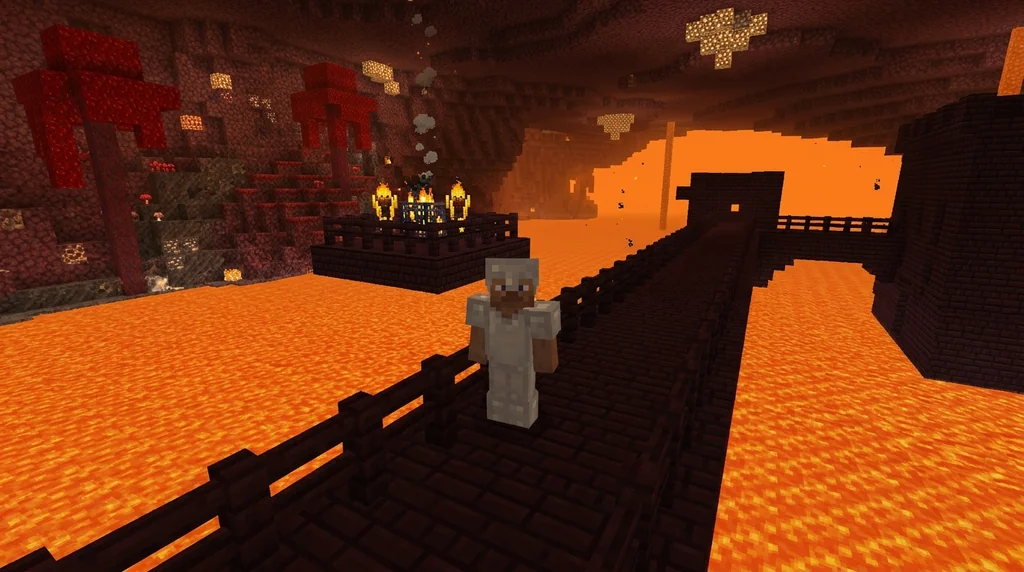
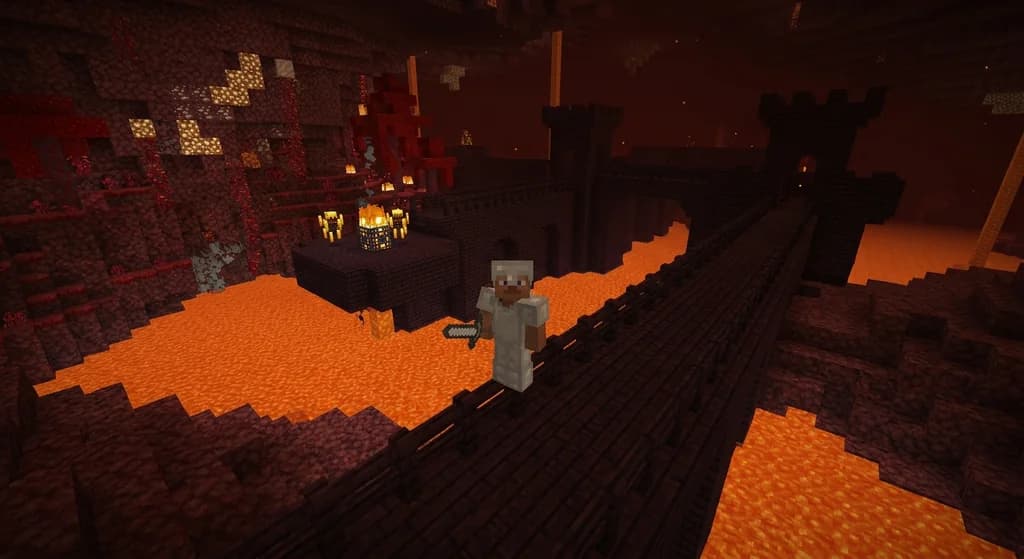
Blaze spawners are the primary reason most players visit fortresses. Each fortress can have up to two blaze monster spawner platforms. These are exterior structures consisting of three full-block "stairs" leading to a small platform fenced with Nether brick fence, with a blaze monster spawner in the center.
Up to 2 blaze monster spawner platforms: structures consisting of three full-block "stairs" leading to a small platform fenced with Nether brick fence, with a blaze monster spawner in the center.
The fortress generation always starts with a plain four-way crossing centered at chunk coordinates 11, ~, 11 of the designated chunk. From there, exterior bridges and interior corridors extend outward. Blaze spawners are found on exterior platforms, so look for open-air bridges rather than enclosed hallways.
Finding Nether Wart
Nether wart is a fungus harvested from Nether wart crops and is used to plant them. It is an essential ingredient in almost every potion.
Nether wart is a fungus harvested from Nether wart crops and is used to plant them.
It is an essential ingredient in almost every potion.
Nether wart crops generate in Nether fortresses in soul sand gardens around stairwells or in chests. It can also appear in bastion remnant courtyards. Because it only generates in these specific structures, it is possible for a fortress or bastion to generate without any Nether wart at all.
Nether wart can generate in Nether fortresses in soul sand gardens around stairwells or in chests.
Because it only spawns in these specific structures, it's possible for a Nether fortress or bastion remnant to generate without Nether wart.
Farming Nether Wart
Once you have collected some Nether wart, you can farm it anywhere. Nether wart can only be planted on soul sand — it cannot be planted on soul soil. It grows through four stages. Each random tick gives a 10% chance of advancing one stage. At default random tick speed, a single Nether wart takes about 34 minutes to fully mature. The growth rate is not affected by light or any other environmental factors, and bone meal cannot be used on Nether wart.
Nether wart can only be planted on soul sand.
The growth rate is not affected by light or any other environmental factors.
Bone meal cannot be used on the Nether wart.
A fully mature crop yields 2–4 Nether wart. Using a tool enchanted with Fortune increases the maximum by 1 per level, up to 7 with Fortune III. Immature crops drop only one Nether wart, even with Fortune.
Breaking a fully grown Nether wart drops 2 to 4 Nether warts, while an immature one drops a single Nether wart.
Using a tool enchanted with Fortune increases the maximum number of Nether wart dropped by 1 per level, for a maximum of 7 for a tool enchanted with Fortune III.
Navigation Tips for Speedrunners
For speedrunners, finding a fortress quickly is essential. Use the /locate command if cheats are enabled. Otherwise, travel along the X or Z axis — fortresses generate in a grid pattern, so moving in a straight line increases your chances of crossing into a region that contains one. The basalt deltas biome is a good place to search because fortresses are most common there. Once inside, prioritize finding a blaze spawner platform and a soul sand garden for Nether wart. Remember that beds explode in the Nether, so bring a shield or use other methods to deal with blazes. For more on bed safety, see our guide on Minecraft Bed Mechanics: Overworld vs. Other Dimensions.
Sources
- The regions are 432×432 blocks in Java Edition and 480×480 blocks in Bedrock Edition. — Nether Fortress
- This leaves only a 368×368 block section in Java Edition or 416×416 block section in Bedrock Edition where a structure can generate. — Nether Fortress
- The chance of a fortress attempting to generate instead of a bastion is 2⁄5 (40%) in Java Edition and 1⁄3 (33.3%) in Bedrock Edition. — Nether Fortress
- However, if a bastion attempts to generate in the basalt deltas, a fortress generates instead, resulting in fortresses being the most common in the basalt deltas. — Nether Fortress
- Up to 2 blaze monster spawner platforms: structures consisting of three full-block "stairs" leading to a small platform fenced with Nether brick fence, with a blaze monster spawner in the center. — Nether Fortress
- Nether wart is a fungus harvested from Nether wart crops and is used to plant them. — Nether Wart
- It is an essential ingredient in almost every potion. — Nether Wart
- Nether wart can generate in Nether fortresses in soul sand gardens around stairwells or in chests. — Nether Wart
Frequently Asked Questions
How many blaze spawners can a Nether fortress have?
Up to two blaze monster spawner platforms can generate in a single Nether fortress. They are always on exterior structures, not inside enclosed corridors.
Can Nether wart grow without soul sand?
No. Nether wart can only be planted on soul sand. It cannot be planted on soul soil or any other block.
How long does Nether wart take to grow?
At default random tick speed, Nether wart fully matures in about 34 minutes on average. Bone meal does not speed up the process.
What is the best biome to find a Nether fortress?
Fortresses are most common in basalt deltas because a bastion remnant that would generate there is replaced by a fortress.
Related guides
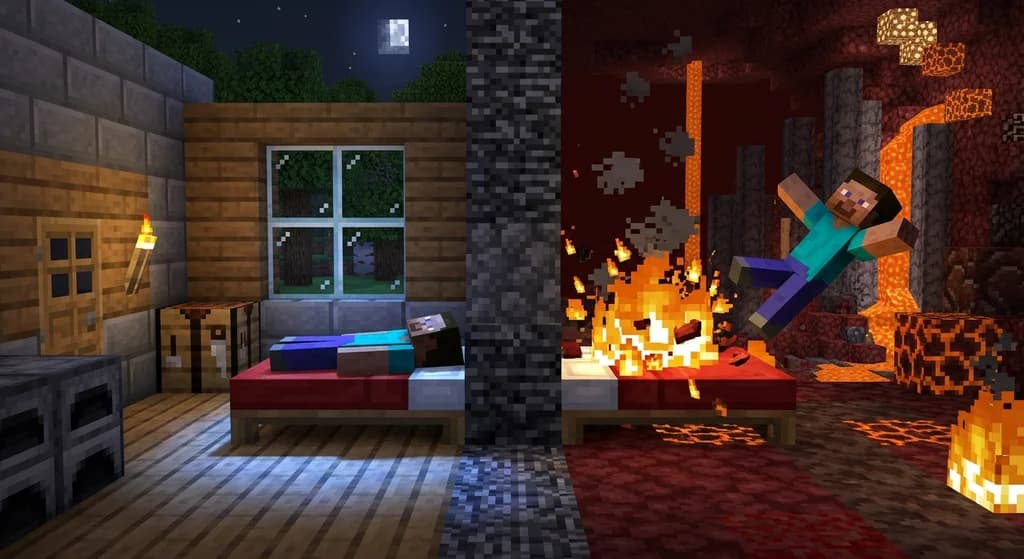
Minecraft Bed Mechanics: Overworld vs. Other Dimensions
Compare how beds work in the Overworld versus the Nether and End. Learn about sleeping mechanics, explosion power, and key differences for survival and speedrunning.
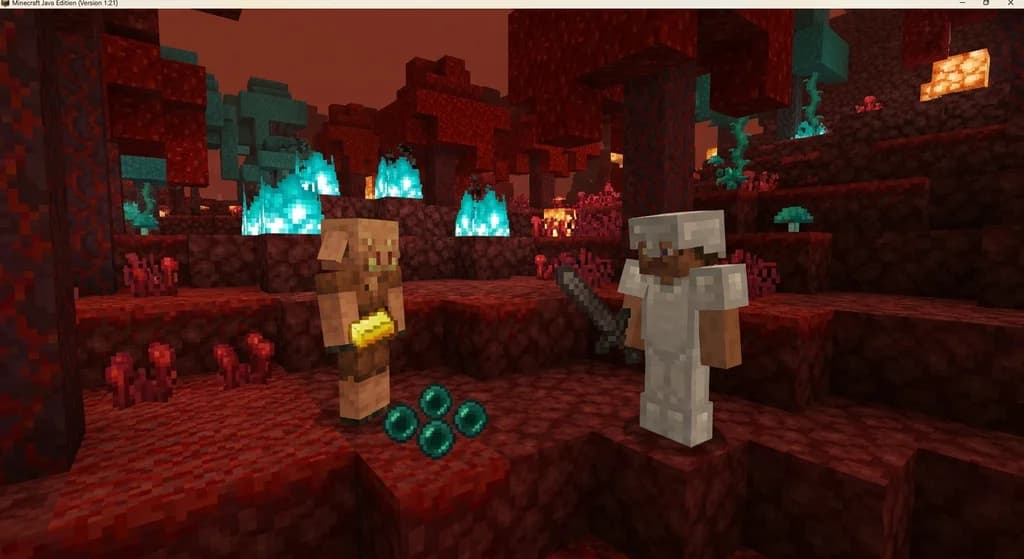
Piglin Bartering for Ender Pearls: Probabilities and Mechanics
Learn the exact probability (10/469 ≈ 2.13%) of piglins bartering ender pearls, how many you get, and how to optimize this mechanic for speedruns.
The Midoffs LIVE Speedrunning Tournament at TwitchCon
Discover everything about The Midoffs LIVE speedrunning tournament at TwitchCon Rotterdam 2026. Learn the event date, location, and what made it a landmark for competitive Minecraft.
Minecraft Speedrunning in the Novel The Tournament
Discover how Minecraft speedrunning appears in the novel Minecraft: The Tournament. Learn about Jett Warner's gardening club run, Hurston Preparatory...
Have a question or another approach?
Compare notes with other readers. Include your edition and version when discussing mechanics.